Velence hídjai: történetek víz és ég között
- A négy híd a Canal Grande felett
- Rialto híd: Velence kereskedelmi szíve
- Accademia híd: kilátás a Canal Grande-ra
- Scalzi híd: a város kapuja
- Alkotmány hídja: hagyomány és modernitás
- Velence további ikonikus hídjai
- Sóhajok hídja: elveszett szabadság és romantika között
- Szabadság híd: kapcsolat a szárazfölddel
- Chiodo híd: egy letűnt kor tanúja
- Paglia híd: Velence első képeslapja
- Fedezd fel Velencét Ca’Savio-ból indulva
Velence, a víz városa par excellence, elképzelhetetlen lenne ikonikus hídjai nélkül, amelyek 121 szigetet kötnek össze csatornákon és folyócskákon keresztül. Több mint 435 szerkezet emelkedik a vízi utak fölé, s minden híd, legyen az nagy vagy kicsi, saját történetet mesél el, legendákat őriz, és egyedi kilátást nyújt a lagúnák városára.
Ezeken az építészeti remekműveken keresztül vezető utazás lehetővé teszi, hogy megértsük a velenceiek leleményességét, és főként egy olyan város fejlődését, amely a környezethez való alkalmazkodást tette legnagyobb erősségévé.
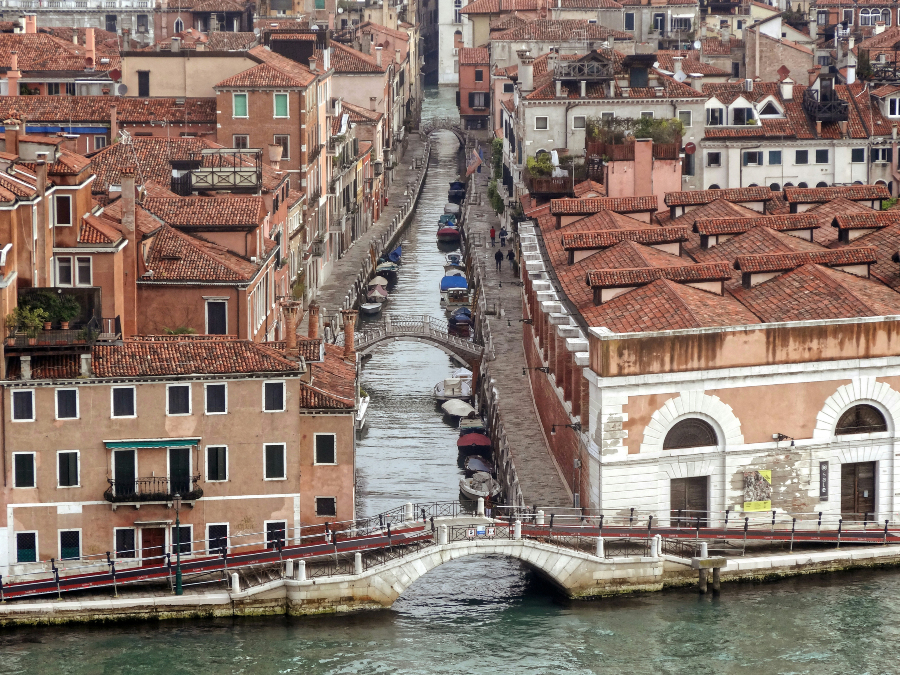
A négy híd a Canal Grande felett
A Canal Grande, a város fő ütőere, négy hídon ível át, amelyek mindegyike meghatározta Velence történelmét, mindegyiknek saját személyisége és története van.
Rialto híd: Velence kereskedelmi szíve
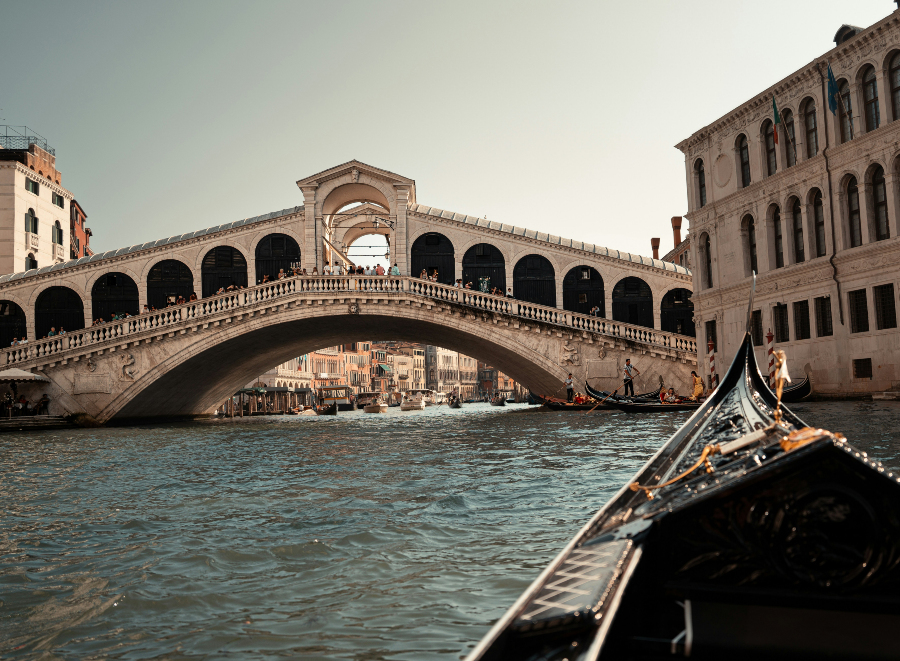
A Rialto híd – valószínűleg a világ leghíresebb hídja – a város fontos csomópontja, amely összeköti San Marco és San Polo negyedét.
Eredete a 12. század végére nyúlik vissza, amikor az első átkelőt összekötött csónakokból építették. Az idő múlásával, a Rialto piac közelsége miatt (amelyről a híd a nevét kapta), és mivel ez volt az egyetlen összeköttetés a Canal Grande két partja között, a szerkezetet többször is fából készült hidak váltották fel, amelyek gyakran összeomlottak a túlzott terhelés és elhasználódás miatt.
Ezért a Velencei Köztársaság úgy döntött, pályázatot ír ki egy kőhíd megépítésére, amelyre olyan híres építészek is benyújtották terveiket, mint Palladio és Michelangelo. Végül Antonio da Ponte nyerte el a megbízást, és 1588 és 1591 között elkészült az a mű, amelyet ma is csodálunk: egyetlen, 31,8 méteres ív Isztriai kőből, amely egyszerre elegáns és monumentális.
A híd, amely hagyományosan kézműves műhelyeknek adott otthont, ma ajándékboltokkal van tele, de szerkezete változatlan maradt, tanúságot téve arról a korról, amikor a mérnöki tudomány és a művészet összefonódott.
Accademia híd: kilátás a Canal Grande-ra
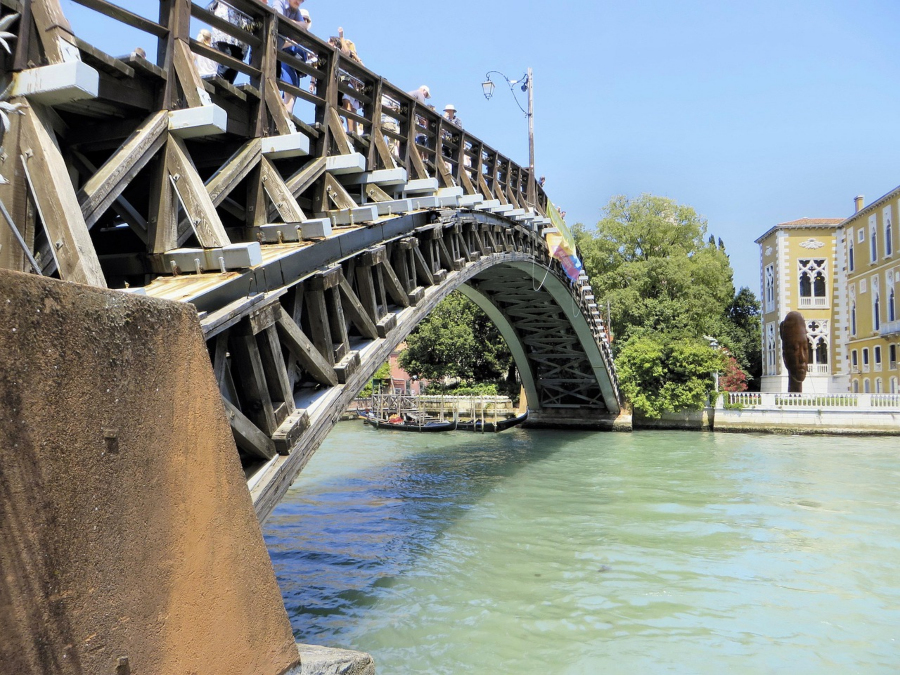
Az Accademia híd, más néven Ponte della Carità, összeköti San Vidalt a volt Santa Maria della Carità templommal, amely ma az Accademia Képtáraknak ad otthont.
Eredetileg 1854-ben építette az osztrák mérnök, Alfred Neville vasból, de ipari szerkezetét a velenceiek sosem szerették, mert nem illett a város építészetéhez.
1933-ban, a fasizmus idején úgy döntöttek, hogy egy ideiglenesnek szánt, Eugenio Miozzi által tervezett fa híddal helyettesítik, amíg egy végleges kőhíd nem készül. Ez az „ideiglenes” híd azonban sosem lett lecserélve, és a ’80-as évek restaurálása óta ma is a Canal Grande egyik legjellegzetesebb átkelője.
Fa szerkezete (amely acélmagot rejt) különleges, szinte romantikus bájt kölcsönöz neki; kedvelt helye a velenceieknek és turistáknak, hogy megcsodálják a naplementét a Canal Grande felett, és az évek során híressé vált a szerelmesek lakatjairól is, amelyeket a korlátra akasztanak, hasonlóan a római Ponte Milvio hagyományához.
Scalzi híd: a város kapuja
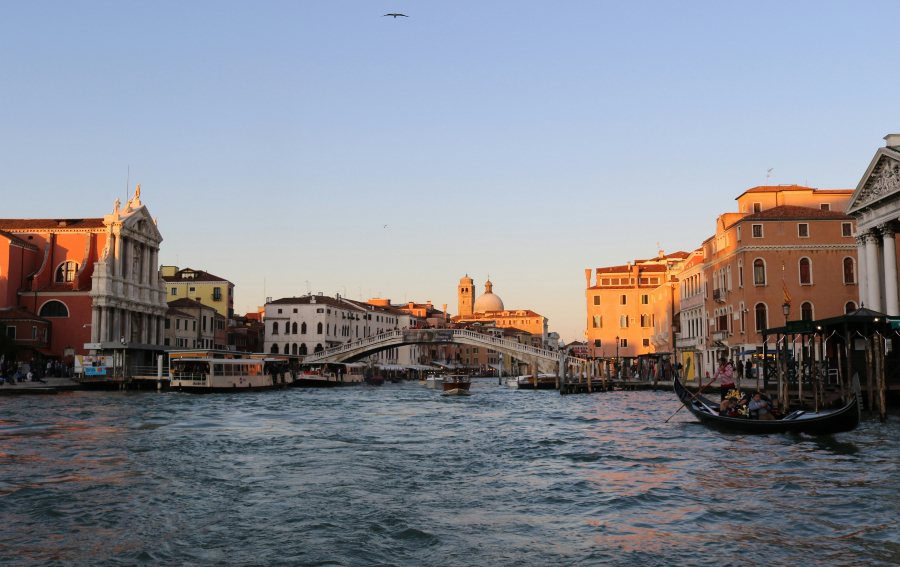
A Santa Lucia vasútállomástól néhány lépésre található Scalzi híd gyakran az első híd, amelyen a vonattal érkező látogatók átkelnek Velencébe érkezve. 1858-ban öntöttvasból tervezték, de 1932-ben Isztriai kőből újjáépítették, hogy jobban illeszkedjen a velencei építészethez, és nagyobb szilárdságot biztosítson a hatalmas forgalom miatt.
Nevét a közeli Santa Maria di Nazareth templomról, azaz „degli Scalzi”-ról kapta, mivel egykor a mezítlábas karmeliták kolostora volt.
A híd ma csodálatos kilátást nyújt a Canal Grande-ra és a történelmi palotákra, amelyek szegélyezik, és kötelező átkelő azok számára, akik a városközpont felé tartanak.
Alkotmány hídja: hagyomány és modernitás
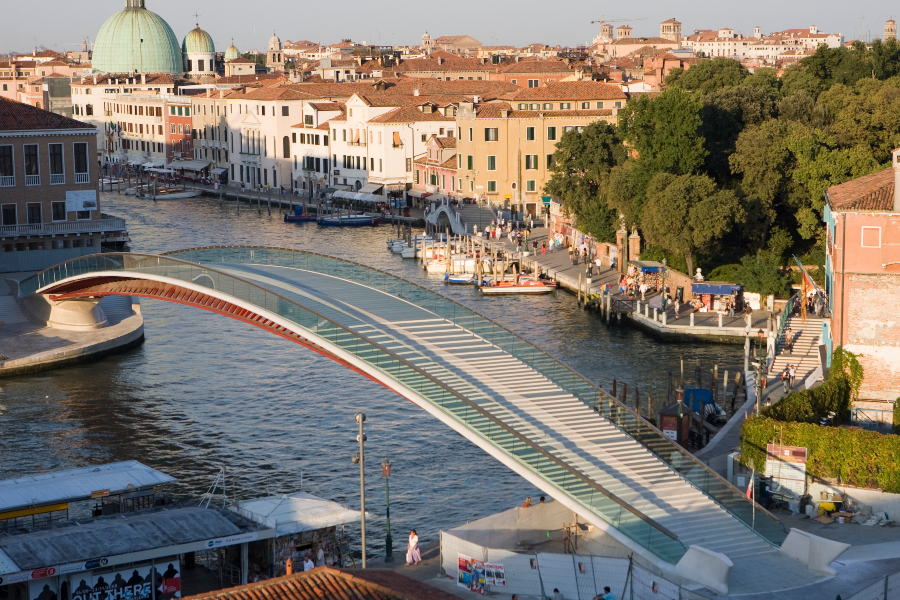
Az Alkotmány hídja – más néven Calatrava híd – a legújabb a négy Canal Grande-i híd közül, és egyben a legtöbbet vitatott.
A spanyol építész, Santiago Calatrava tervezte, és 2008-ban avatták fel. Az Alkotmány hídja 180 méter hosszú, és összeköti a Piazzale Romát, a szárazföldről a város történelmi központjába vezető fő csomópontot, a Santa Lucia vasútállomással.
Modern szerkezete, amelyet acélív és edzett üveg padlózat jellemez, megosztotta a közvéleményt: egyesek értékelik az innovációt és a kortárs dizájnt, mások szerint nem illik Velence történelmi környezetébe, és nem túl praktikus a kialakítása miatt. „Üveghídnak” is nevezik, mert átlátszó (és csúszós, főleg télen vagy esőben) lépcsőfokai lehetővé teszik, hogy lássuk az alatta lévő vizet.
A viták ellenére a híd példája annak, hogyan fejlődik Velence folyamatosan, befogadva a modernitást, miközben megőrzi évezredes történelméhez fűződő kapcsolatát.
Velence további ikonikus hídjai
A négy Canal Grande-i hídon kívül Velence további átkelőket is őriz, amelyek lenyűgöző és különleges történeteket mesélnek. Némelyik világszerte ismert, mások kevésbé, de nem kevésbé lenyűgözőek.
Sóhajok hídja: elveszett szabadság és romantika között
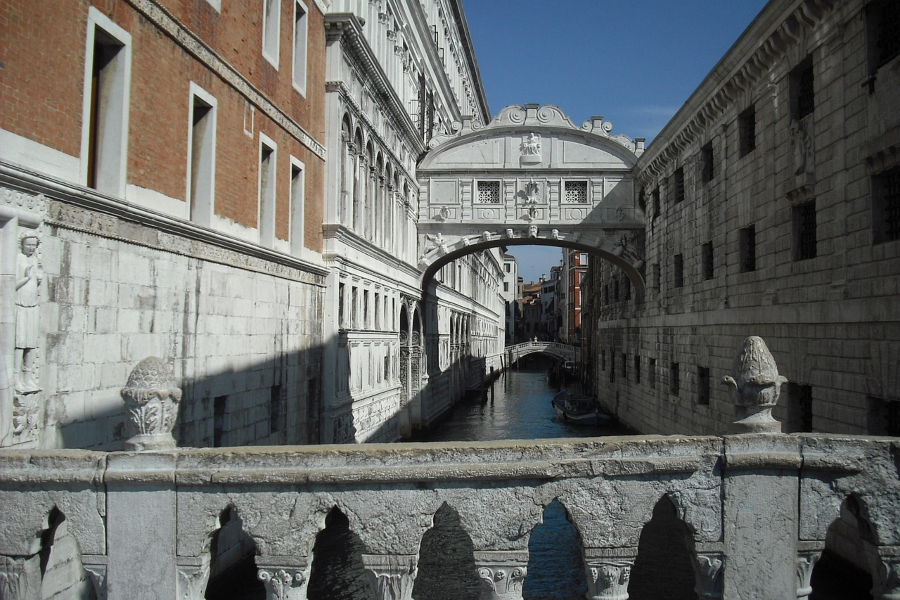
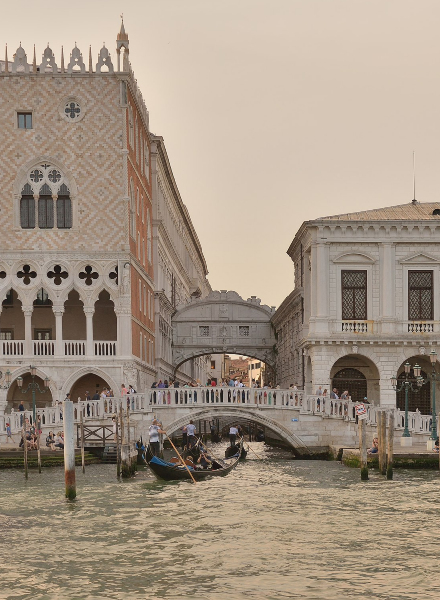
A Sóhajok hídja talán a Rialto után Velence legtöbbet fényképezett hídja. A 17. század elején épült Isztriai kőből, Antonio Contino tervei alapján, ez a barokk stílusú híd összeköti a Dózse-palotát az Új Börtönökkel.
Nevét egy romantikus, de valójában szomorú hagyományról kapta: úgy tartják, hogy a rabok, miután az állami inkvizítorok elítélték őket, áthaladva rajta, sóhajtottak, miközben utoljára pillantottak a lagúnára és elveszett szabadságukra. A mindössze 11 méter hosszú híd idővel a melankólia és végzet, de a szerelem szimbólumává is vált, köszönhetően annak a legendának, miszerint azok a párok, akik csónakban csókolóznak alatta, örök szerelemre vannak ítélve.
A Sóhajok hídját belülről csak a Dózse-palota túráján lehet megtekinteni, ami lehetőséget ad arra, hogy a rabok nyomában járjunk, és jobban megértsük a Serenissima történetét.
Szabadság híd: kapcsolat a szárazfölddel
Ha Velence hídjaira gondolunk, ősi szerkezetek jutnak eszünkbe, amelyek szűk csatornák felett ívelnek át. De van egy híd, amely más történetet mesél – Velence és a szárazföld kapcsolatát: a Szabadság híd.
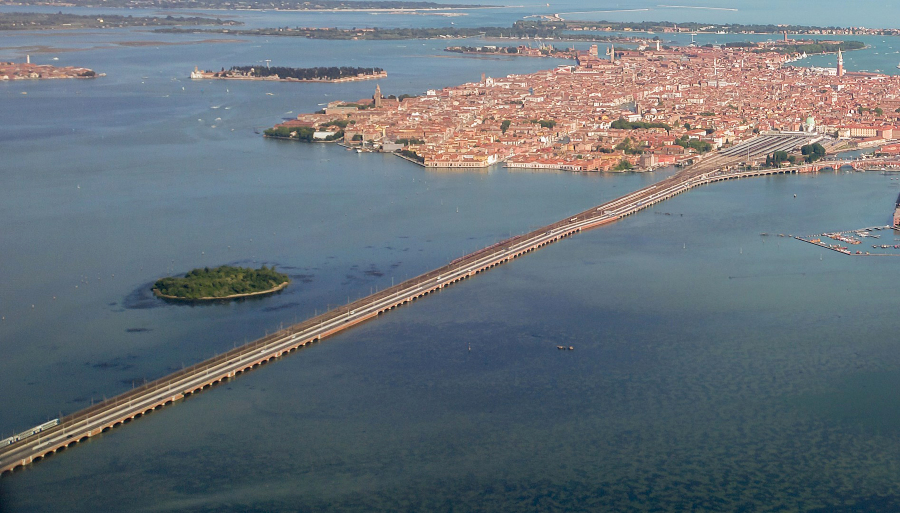
A 3 850 méter hosszú híd Olaszország egyik leghosszabb hídja; építése 1841-ben kezdődött, az osztrák megszállás idején, azzal a céllal, hogy Velencét Milánóval vasútvonal kösse össze. Az első vasúti átkelés 1846. január 11-én történt, és forradalmi jelentőségű volt a város számára: először a történelem során Velence fizikailag is kapcsolódott a kontinenshez.
De ez még nem minden: az építéshez 80 000 vörösfenyő cölöpöt és 21 millió téglát használtak fel, ami rendkívüli mérnöki teljesítmény volt. Akkoriban a híd a világ leghosszabbja volt, és félszigetté változtatta Velencét, örökre megváltoztatva kapcsolatát Olaszország többi részével.
1933-ban, a fasiszta rezsim alatt, megnyílt az út is, amelyet Eugenio Miozzi mérnök tervezett. Eredetileg Ponte Littorio-nak hívták, majd 1945-ben, a nácifasizmus felszabadítása után, átnevezték Szabadság hídjának.
Ma a Szabadság hídja a fő közúti bejárat Velencébe mindazok számára, akik autóval vagy busszal érkeznek, és az egyetlen út, amely a Piazzale Romához és a Tronchetto szigetéhez vezet. Átkelni rajta azt jelenti, hogy tanúi lehetünk a táj fokozatos átalakulásának: a szárazföld átadja helyét a lagúnának, a város körvonalai egyre élesebbek lesznek, míg végül Velence teljes pompájában feltárul.
Érdekesség, hogy az út mentén egy emlékmű állít emléket az 1849-es osztrák ostromnak, amely a velencei történelem egyik legnehezebb pillanatát idézi fel. A híd tehát nem csupán infrastruktúra: a szabadság, a nyitottság és az egyedülálló város és a kontinens többi része közötti kapcsolat szimbóluma.
Chiodo híd: egy letűnt kor tanúja
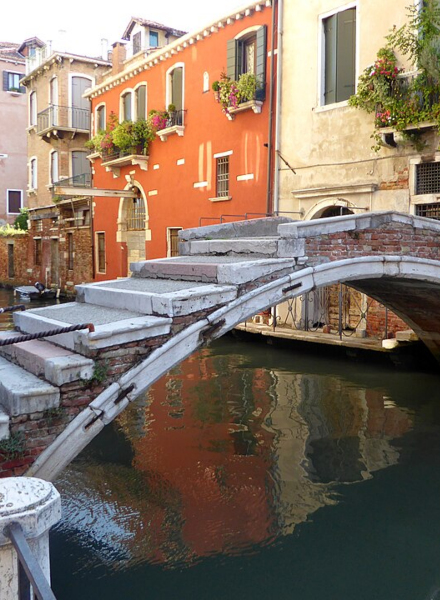
A Cannaregio negyedben található Velence egyik legkülönlegesebb hídja: a Chiodo híd. Ez az egyik utolsó két híd a városban (a torcellói Ördög hídjával együtt), amely korlátok nélkül maradt, az úgynevezett „bande”-k nélkül, amelyeket a legtöbb velencei hídhoz biztonsági okokból utólag építettek.
A Chiodo híd magán híd, amely egy lakóövezetbe vezet, ezért kevésbé látogatott a turisták által; ősi szerkezete, amely a XV. századból származik, hiteles képet nyújt a régi Velencéről, amikor a hidak elengedhetetlen, de veszélyes átkelők voltak, különösen éjszaka vagy magas vízálláskor.
Felfedezni annyit jelent, mint elmerülni a város kevésbé turistás útvonalain, amelyek Velence legigazibb, legrejtettebb lelkét mutatják meg.
Paglia híd: Velence első képeslapja
A Paglia híd átszeli a Rio di Palazzo-t, és összeköti a Piazzetta San Marco mólóját a Riva degli Schiavonival. 1360 körül épült, és Velence egyik első kőhídja, amely ma is megőrzi eredeti oldalsó „bande”-it.
Különös neve történelmi funkciójából ered: ezen a ponton kötöttek ki a szalmával és szénával megrakott csónakok, amelyeket az állatok etetésére és a tetők fedésére használtak. A híd a szalma kereskedelem ellenőrzési pontja is volt, amelyet a Serenissima katonái felügyeltek.
Ma a Paglia híd Velence egyik legforgalmasabb helye, főként azért, mert innen nyílik a legjobb kilátás a Sóhajok hídjára. Kötelező fotóhely, ahol érdemes megállni egy pillanatra, mielőtt elmerülnénk a Szent Márk tér nyüzsgésében.
Fedezd fel Velencét Ca’Savio-ból indulva
Velence hídjai jóval többek egyszerű átkelésnél: évszázadok történelmének néma tanúi, a város szépségének kiváltságos megfigyelőpontjai, olyan helyek, ahol meg lehet állni és át lehet adni magunkat a Serenissima egyedülálló hangulatának.
A Camping Ca’Savio-ból, amely Cavallino természetében található, Velence könnyen elérhető; így egy napot is szentelhetünk hídjainak felfedezésére, amelyek mindegyike egyedi történetet mesél el.
A Ca’Savio szervezett kirándulásokat is kínál Velencébe és vezetett városnézéseket, amelyek lehetővé teszik a város különböző nézőpontokból való felfedezését, valamint kellemes hajókirándulásokat Murano, Burano és Torcello megismerésére, amelyeket a kempingben eltöltött pihentető pillanatokkal lehet váltogatni.
Szeretnél egy olyan helyen megszállni, ahol a történelem és a természet találkozik? Foglald le most következő nyaralásodat a Ca’Savio kempingben!