Natural History Museum of Venice: a journey through the history of life
Thinking of Venice, the mind immediately turns to its winding canals, historic buildings reflected in the water, and squares bustling with tourists from all over the world. But the Serenissima also holds lesser-known treasures that will impress and amaze young and old alike. Among these, the Natural History Museum is an unforgettable experience for those who want to visit Venice differently, especially with kids.
Located in the magnificent Fontego dei Turchi, a Byzantine palace overlooking the Grand Canal, the museum offers a fascinating millions of years evolution journey. Here, among ancient fossils, skeletons of prehistoric creatures and scientific reconstructions, you can discover how life has changed on our planet.
For families staying in Cavallino, a visit to the museum is ideal for combining the city’s discovery with an unforgettable experience, especially for curious kids.
Giancarlo Ligabue: the explorer who gave his name to the museum
The Natural History Museum of Venice is named after fellow citizen Giancarlo Ligabue, a well-known name in the 20th-century Italian palaeontology and exploration scene. Ligabue, however, was not only an internationally renowned palaeontologist, but also an entrepreneur, traveller and passionate scholar who dedicated his life to scientific research and the sharing of knowledge.
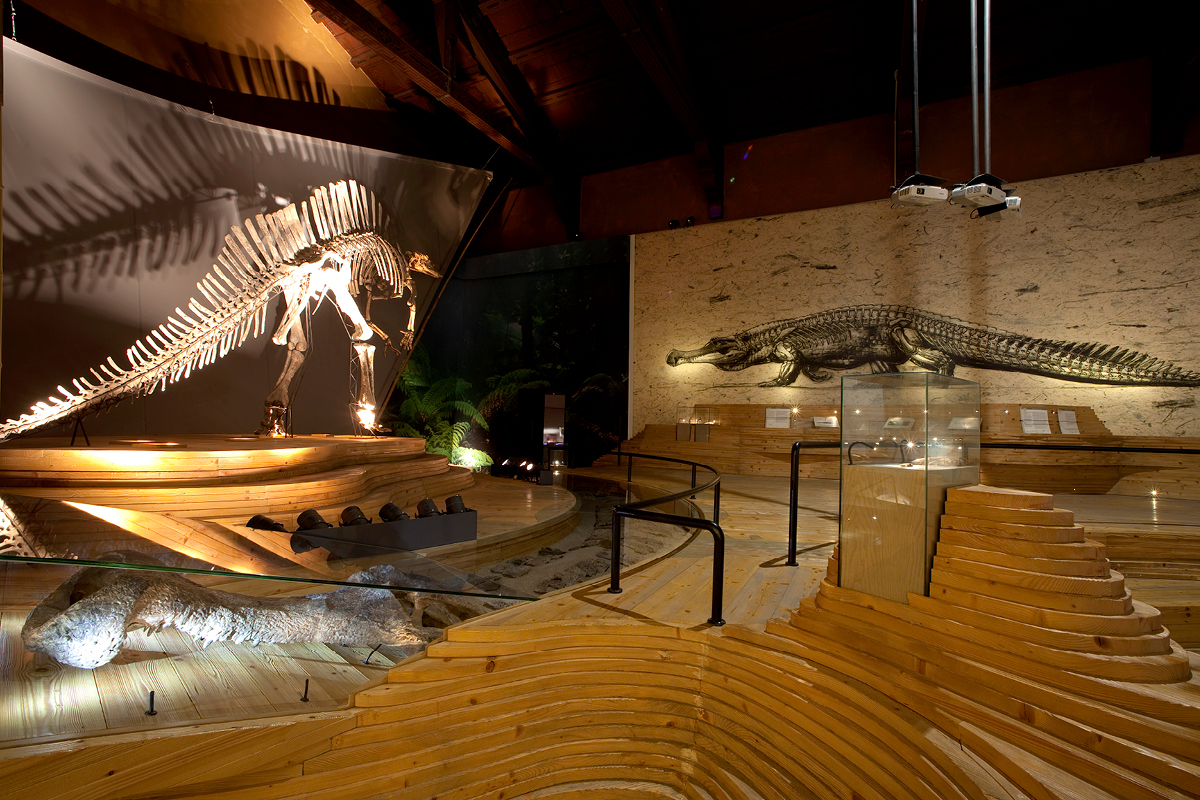
His legacy is deeply rooted in this museum. In 1973, Ligabue led a scientific expedition to the Ténéré desert in Niger, which led to the discovery of paleontological finds of extraordinary importance, including the almost complete skeleton of an Ouranosaurus nigeriensis dinosaur and the imposing skull of a Sarcosuchus imperator, a giant crocodile that lived millions of years ago. These findings have significantly enriched the collections of the Venetian museum, making it a point of reference for scholars and enthusiasts.
Therefore, naming the museum after Ligabue is both a tribute to him and to his contribution to knowledge of the history of life on Earth.
Dinosaurs in Venice: giants of the past in the heart of the lagoon
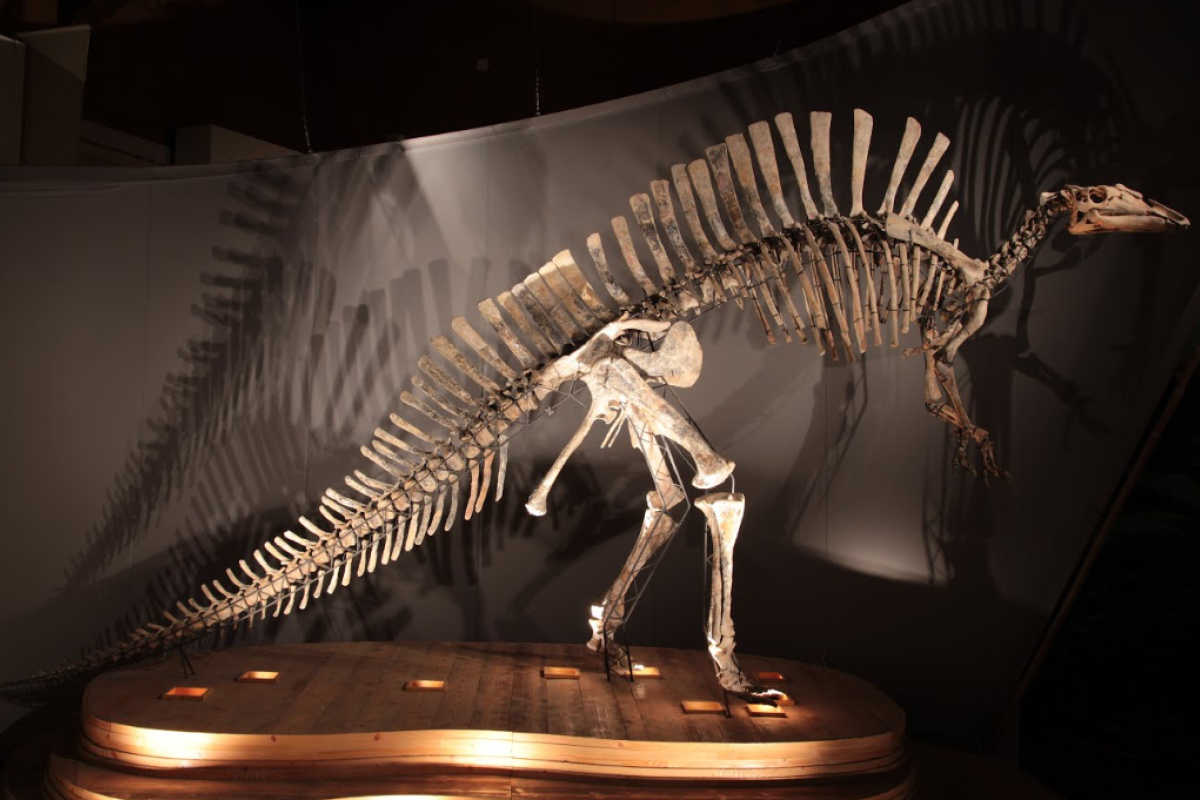
Dinosaurs inevitably capture the attention of young and old alike, and the Natural History Museum of Venice does not disappoint. The museum is famous for housing two dinosaur skeletons, the pride of its paleontological collections.
The undisputed star is Ouranosaurus nigeriensis, a herbivorous dinosaur that roamed our planet around 110 million years ago. The skeleton on display is one of the most complete in the world and is the result of Ligabue’s aforementioned expedition to Niger. The Ouranosaurus could reach seven metres in length and three metres in height, with an estimated weight of about two tonnes. But one of its most fascinating features are the long neural spines that run along its back and tail, probably used for thermoregulation or to impress rivals.
In addition to this giant herbivore, visitors can admire the monumental skull of Sarcosuchus imperator, a prehistoric crocodile that could exceed 12 metres in length. Its powerful jaws and sharp teeth tell the story of a fearsome predator that dominated the rivers of prehistoric Africa.
The presence of these skeletons makes the museum a magical place for children, who can come face to face with creatures that walked the Earth in a remote era.
What to see at the Natural History Museum of Venice
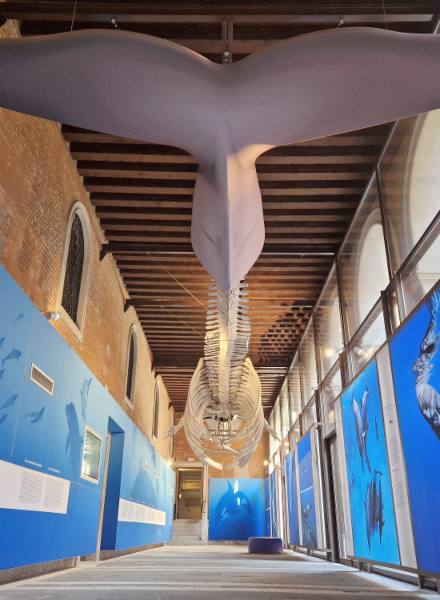
In addition to the spectacular dinosaurs, the museum offers a rich and varied exhibition covering various aspects of natural history. The museum’s permanent collections are organised to take visitors on a chronological journey through the evolution of life.
Starting from the origins, with marine fossils that bear witness to the first forms of life in the primordial oceans, visitors encounter finds of animals and plants that populated the Earth in different eras, up to the giant creatures of the Ice Age. Particularly impressive is the section dedicated to local fauna, which illustrates the biodiversity of the Venice lagoon and the Adriatic Sea.
There’s also a big focus on anthropology, with a final section exploring human evolution and our relationship with the natural world. Through archaeological and ethnological finds and scientific reconstructions, you can learn how Homo sapiens appeared and spread across the planet around 40,000 years ago.
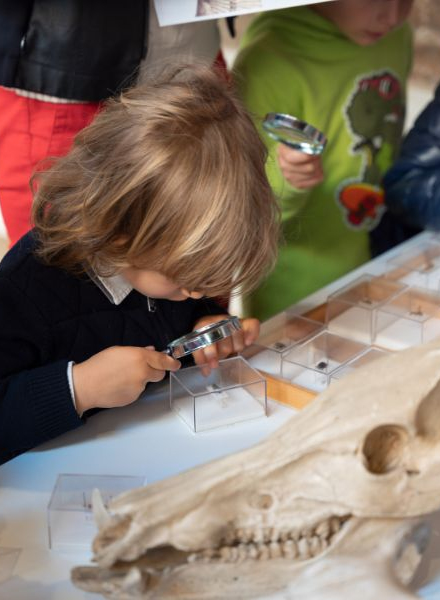
To make the experience even more engaging, the museum offers interactive exhibitions, educational workshops and activities specially designed for schools and families. In addition, during the summer, themed workshops are organised for children, so that learning becomes fun.
Tickets
There are several ticket options for visiting the Natural History Museum of Venice: adult tickets cost 10 euros, while discounts are available for children, students, seniors over 65, and organised groups. Children under 5 years old are free.
Tickets can be purchased directly at the museum ticket office or easily online through the official website, thus avoiding queues, especially during the high season.
Contact details and opening hours
The Natural History Museum is located in Venice, in the Santa Croce district 1730, inside the Fontego dei Turchi. It can be easily reached on foot or by vaporetto, stopping at Riva de Biasio on line 1 of the Venetian public transport network.
Opening hours may vary depending on the season and public holidays, so it is always recommended to check the updated timetable on the museum’s official website or contact the museum directly by email or telephone before planning your visit.
How to reach the Natural History Museum
For those staying at Camping Ca’Savio, the Natural History Museum of Venice is easily accessible and is an ideal destination for a day of culture and discovery. From the campsite, located in the peaceful setting of Cavallino, you can take the ATVO public bus to the Punta Sabbioni pier. From there, take the ACTV motorboat (line 14) to Piazza San Marco (S. Zaccaria stop). Once in Piazza San Marco (the journey lasts about 30 minutes), those who wish to stroll through the charming streets of Venice can continue on foot towards the Rialto Bridge and reach the museum in 30 minutes. It is also possible to reach the museum by vaporetto (ACTV line 5.2 from S. Zaccaria), stopping at the nearby Riva de Biasio stop, which is a 4-minute walk away.
For those who prefer a more relaxing experience and want to discover the most authentic parts of the city, away from the crowded tourist routes, Camping Ca’Savio also organises excursions to Venice and the nearby islands of the lagoon accompanied by expert naturalist guides.
The campsite’s proximity to the lagoon city makes every visit easy and accessible, allowing you to alternate days of relaxation immersed in the nature of Cavallino with moments of cultural discovery in the heart of Venice.
Book your next holiday at Ca’Savio now and gift your family with unforgettable days surrounded by nature, sea and culture!